
 Español
 Deutsch
 Français
 Português (Brasil)
 Türkçe
 Русский
 简体中文
简体中文 日本語
日本語VPS on Proxmox VE
Connect a Proxmox VE server, install official cloud images from the admin panel and sell VPS products. When the invoice is paid, PNLCS clones, configures and starts the server; the customer manages it from the client portal.
 Debian
 Ubuntu
 AlmaLinux
 Rocky Linux
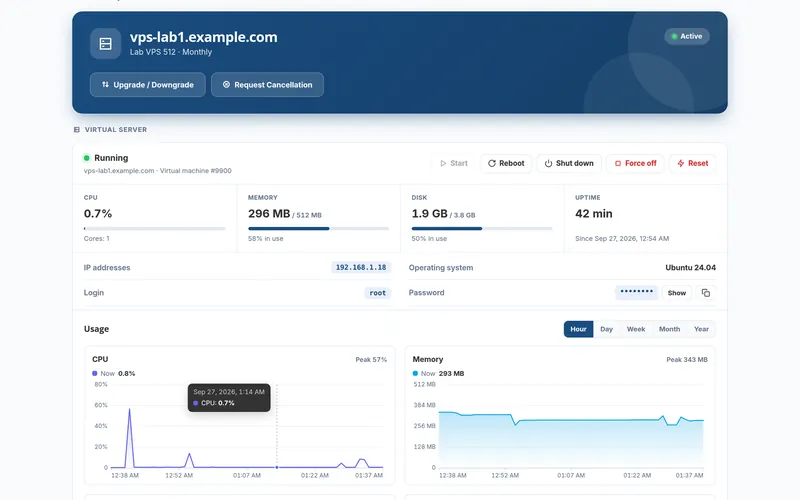
What the customer can do
| Area | What happens |
|---|---|
| Power | Start, reboot, shut down (forced after a minute if ignored), force off, reset |
| Live status | CPU, memory, uptime, addresses and how full the disk is |
| Graphs | CPU, memory, network and disk from Proxmox’s own statistics |
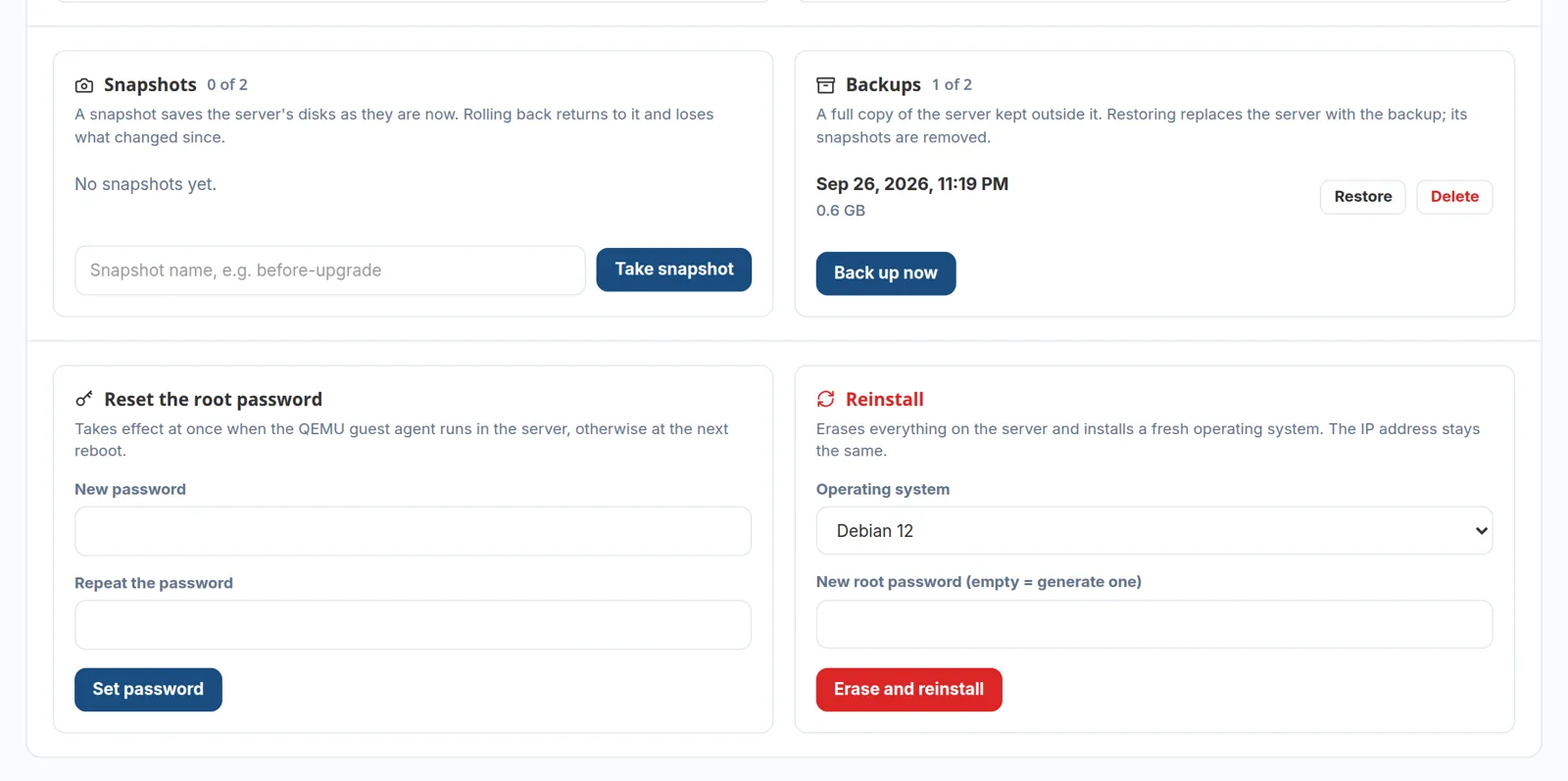
| Root password | Set at once through the guest agent, otherwise at next boot |
| Reinstall | Any system the product offers; the VM, MAC and IP address stay |
| Snapshots | Take, roll back and delete, up to the plan’s number |
| Backups | To local storage or Proxmox Backup Server; restore and delete |
Destructive actions ask first
Anything that wipes data asks for the server’s name. Long jobs, like a reinstall or a restore, run in the background and finish even if the page is closed.
What PNLCS does on each billing event
| Event | On Proxmox |
|---|---|
| Order paid | Cloned into the pool with the next VM id, cloud-init applied, disk grown, protection on, started |
| Suspended | Start at boot switched off, then shut down, so a host reboot does not bring it back |
| Unsuspended | Start at boot on, started |
| Terminated | Stopped, protection lifted, deleted with its disks; the address returns to the pool |
| Upgraded | New cores and memory; the disk grows and is never shrunk |
| Every hour | Disk usage and this month’s traffic, from Proxmox’s statistics |
Machines PNLCS did not create are left alone
A hypervisor usually runs more than customer servers. These rules keep PNLCS to its own.
- Every server PNLCS creates carries a tag and a note naming its service; it acts only on machines with that mark
- The recommended API token reaches only its own pool, and the connection test warns about rights billing never needs
- Servers are created with deletion protection, lifted only at the moment of termination
- Customers never see the hypervisor’s address
Try PNLCS
Click around the live demo, or install it with Docker.