
 Español
 Deutsch
 Français
 Português (Brasil)
 Türkçe
 Русский
 简体中文
简体中文 日本語
日本語Features
The storefront, client portal, billing, provisioning and support are one Laravel application. This page lists what each part does; the documentation explains how.
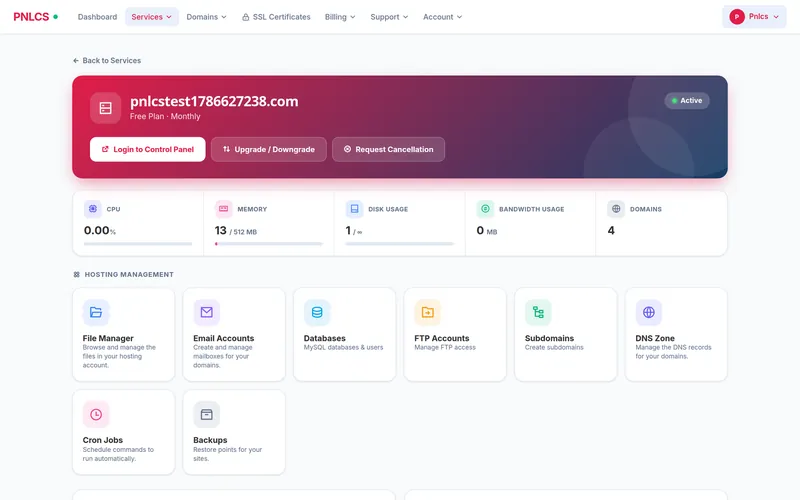
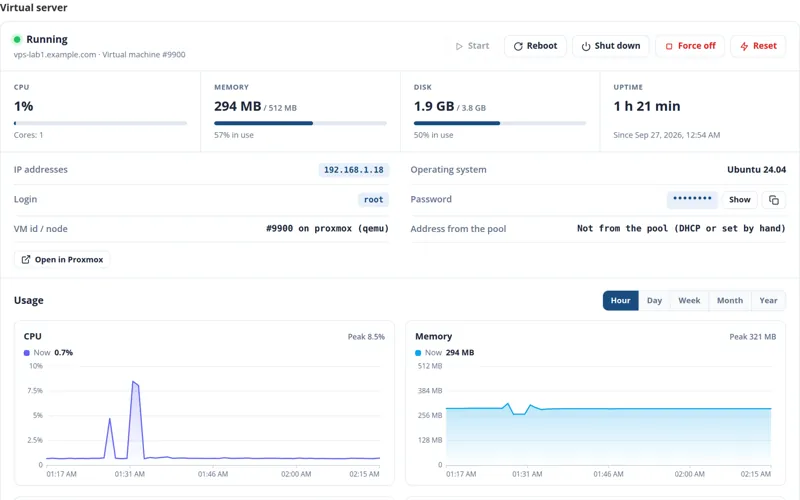
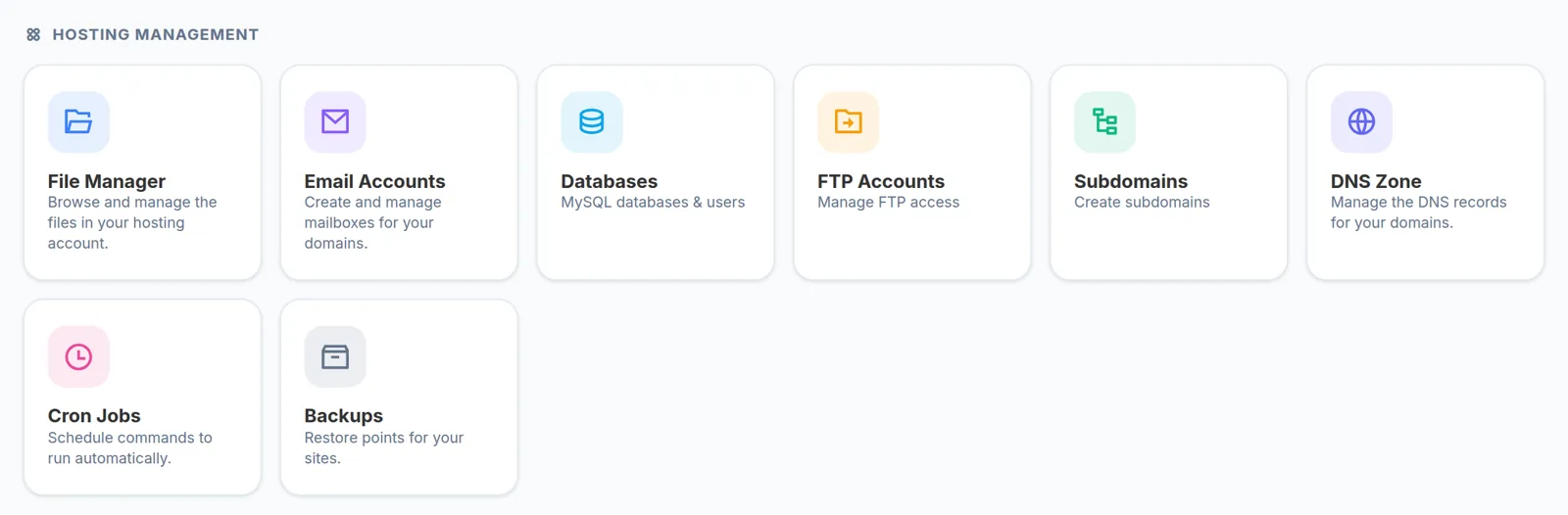
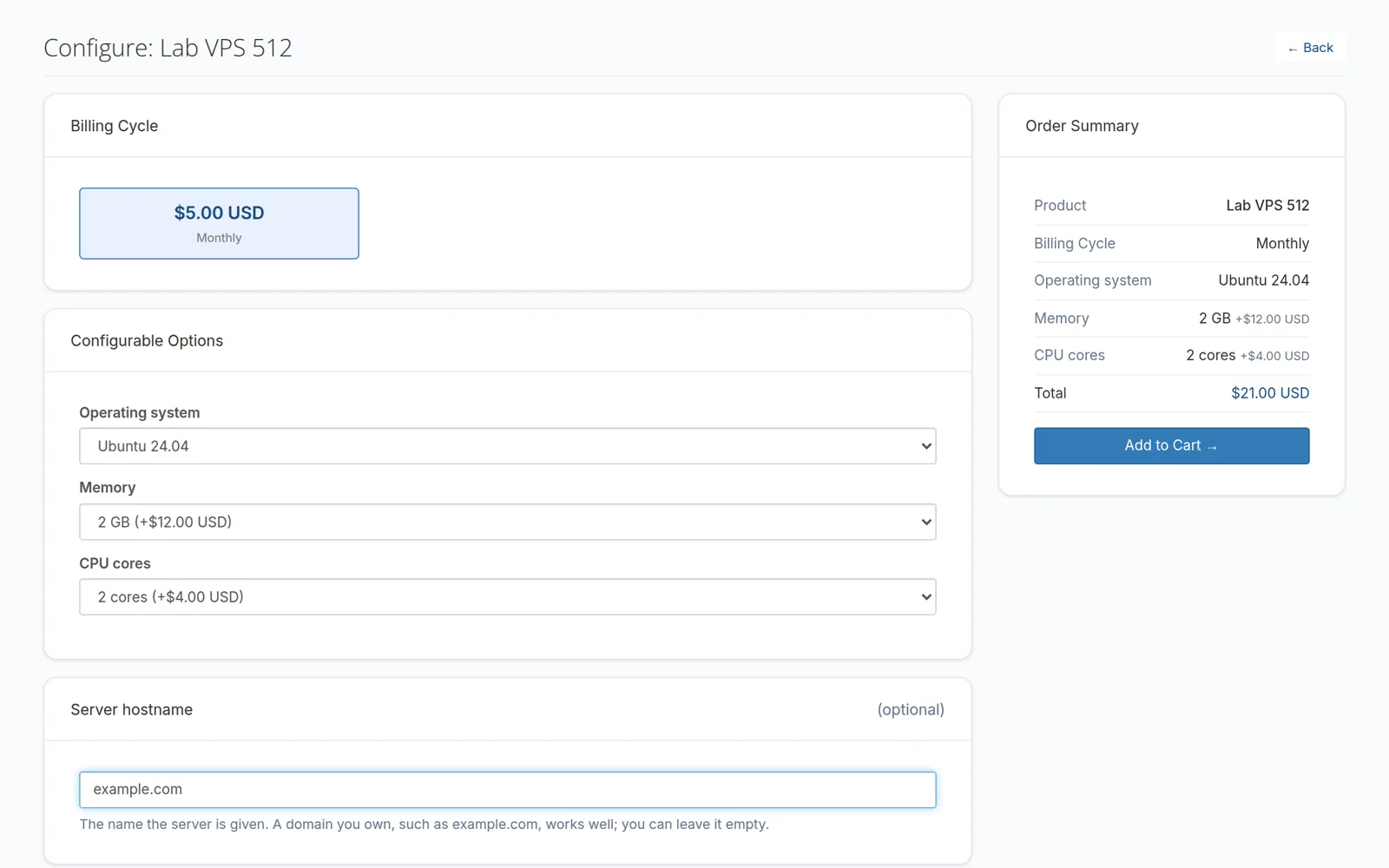
- Shop and checkout
- Browse plans, configure a service, apply coupons, pay.
- Service management
- Upgrade, downgrade, cancel and toggle auto-renew.
- Domains
- Register, transfer and renew; EPP codes and WHOIS.
- Invoices
- Pay online, download PDFs, add funds, use credit balance.
- Quotes
- Review and accept pre-sales quotes; an accepted quote becomes an invoice.
- Bank-transfer notices
- Report an offline payment with a receipt upload.
- SSL certificates
- CSR generation, approver emails and automatic install.
- Support and knowledge base
- Tickets with attachments, a searchable knowledge base and announcements.
- Network status
- Active incidents and scheduled maintenance.
- Account security
- Two-factor sign-in, login alerts and session history.
Billing and automation
A service is activated only after the server module reports success.
- Recurring billing
- Monthly, quarterly, semi-annual, annual and biennial cycles.
- Automatic suspension
- Unpaid services are suspended after a grace period you set.
- Reminders
- Invoice, payment, card expiry and domain renewal emails.
- Tax rules
- By country and state, with liability reports.
- One payment engine
- Gateways, manual payments and credit take the same path, with partial payments and overpayment to credit.
- Refunds
- Full or partial, through the gateway API or recorded offline.
- Reliable provisioning
- Failures are queued and retried automatically, with an alert to staff.
- Usage billing
- Disk and bandwidth overage, opt-in per product.
- Late fees, coupons, promotions
- Plus credit balances and an add-funds flow.
- Scheduled housekeeping
- Exchange rates, database backups and log retention on a schedule.
Admin panel
What staff use every day.
- Dashboard
- Revenue, signups, pending orders and open tickets at a glance.
- Clients
- Profiles, notes, billing summary and login-as-client.
- Orders and invoices
- Manual creation, bulk actions, mass mail, PDF export.
- Products and bundles
- Configurable options, add-ons and pricing matrices.
- Help desk
- Internal notes, escalation rules, spam filter, predefined replies.
- Reports
- 27 built in: income, forecasts, retention, tickets, domains, tax.
- Quotes and projects
- A WHMCS-style pre-sales flow.
- Calendar
- Events, reminders and scheduled tasks.
- Roles and permissions
- Role-based access with more than 45 fine-grained permissions.
- Two-factor authentication
- For staff and clients, with recovery codes for staff.
- Rate limiting
- On login, 2FA checks, password resets and email resends.
- Admin IP allow-list
- Optional, for the admin area.
- Sessions
- Timeouts and force-logout.
- Activity log
- Every admin action recorded; banned IPs and emails.
Languages
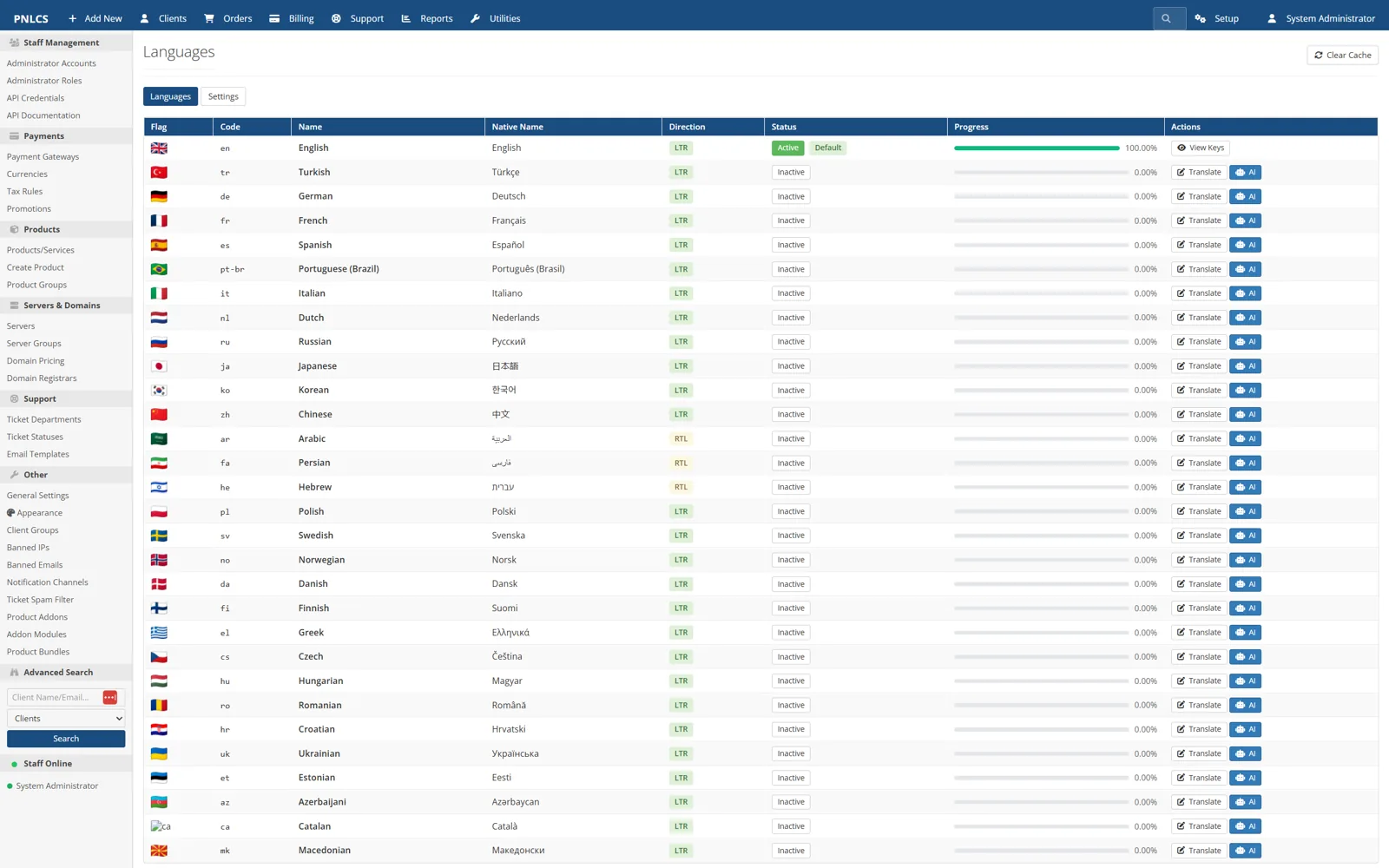
30 locales; translations are editable in the browser.
- 30 locales
- English active by default; switch others on as you need them.
- In-browser editor
- Change any of the 2,232 interface strings without touching files.
- AI-assisted translation
- Fill missing keys in bulk, then review.
- Import and export
- JSON per locale, for translators who prefer their own tools.
- HTTP API
- 171 actions with WHMCS action names, and an OpenAPI 3.1 description.
- MCP server
- Let an AI assistant read and, if you allow it, act through the API.
- Hooks
- WHMCS-compatible
add_hook()with 20+ hook points; a failing hook never breaks billing. - Webhooks
- Inbound gateway callbacks and outbound events.
- Modules
- Server, gateway, registrar and SSL modules, plus add-ons.
- Email piping
- IMAP or POP3 mailboxes turn emails into tickets and replies.
curl -G https://example.com/api/v1/getclients \
  -H "X-API-Key: $PNLCS_IDENTIFIER" \
  -H "X-API-Secret: $PNLCS_SECRET" \
  --data-urlencode "limitnum=5"
add_hook('InvoicePaid', 1, function (array $vars) {
    $invoice = $vars['invoice'];
    // ...
});
Try PNLCS
Click around the live demo, or install it with Docker.